The commission’s new enforcement sweep, Operation AI Comply, recently brought action against several companies using deceptive or unfair practices through artificial intelligence.
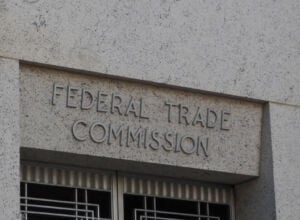 The commission’s new enforcement sweep, Operation AI Comply, recently brought action against several companies using deceptive or unfair practices through artificial intelligence.
10/03/2024 3:10 P.M.
3.5 minute read
The Federal Trade Commission has initiated a new law enforcement sweep called Operation AI Comply that focuses on companies misusing artificial intelligence to deceive consumers, according to a recent press release.
Several businesses have been charged with using AI to promote scams, fake reviews, and false promises of financial success.
“Using AI tools to trick, mislead, or defraud people is illegal,” said FTC Chair Lina M. Khan. “The FTC’s enforcement actions make clear that there is no AI exemption from the laws on the books. By cracking down on unfair or deceptive practices in these markets, FTC is ensuring that honest businesses and innovators can get a fair shot and consumers are being protected.”
Here are key actions the FTC has taken:
DoNotPay
DoNotPay claimed to provide AI-powered legal services, branding itself as “the world’s first robot lawyer.”
The company promised that its service would allow consumers to “sue for assault without a lawyer” and “generate perfectly valid legal documents in no time,” and that the company would “replace the $200-billion-dollar legal industry with artificial intelligence,” according to the FTC’s complaint (PDF).
However, the FTC found that its services were inadequate and failed to replace human lawyers as promised.
The company also falsely claimed its AI could check websites for legal violations.
DoNotPay has settled with the FTC, agreeing to pay $193,000 and “provide a notice to consumers who subscribed to the service between 2021 and 2023 warning them about the limitations of law-related features on the service,” according to the press release.
Read the consent order (PDF) and decision (PDF).
Ascend Ecom
Ascend Ecom, led by William Basta and Kenneth Leung, is accused of defrauding consumers by falsely advertising AI tools that would help them generate passive income through online stores.
According to the complaint (PDF), the scheme has defrauded consumers of at least $25 million.
The FTC alleges that consumers spent tens of thousands of dollars to start online stores on ecommerce platforms such as Amazon, Walmart, Etsy, and TikTok, and Ascend failed to deliver on its promises.
As a result of the FTC’s complaint (PDF), “a federal court issued an order temporarily halting the scheme and putting it under the control of a receiver.”
The FTC’s case is ongoing and will be decided by a federal court.
Ecommerce Empire Builders (EEB)
EEB, run by CEO Peter Prusinowski, is another business accused of making false claims about AI-powered tools for creating online storefronts. The company promised significant profits through training programs that can cost almost $2,000 or by buying a “done for you” online storefront for tens of thousands of dollars, but few consumers made any money.
The complaint alleges that “EEB’s CEO, Peter Prusinowski, has used consumers’ money – as much as $35,000 from consumers who purchase stores – to enrich himself while failing to deliver on the scheme’s promises of big income by selling goods online.”
The FTC has taken legal action, with a court halting EEB’s operations while the case continues.
Rytr
Rytr, an AI writing service, offered tools for generating consumer reviews, which the FTC found were often false or misleading.
The company allowed users to create unlimited AI-generated reviews, potentially harming consumers who relied on them for purchasing decisions, according to the complaint (PDF).
Additionally, the complaint alleges that “at least some of Rytr’s subscribers used the service to produce hundreds, and in some cases tens of thousands, of reviews potentially containing false information.”
Rytr has agreed to stop promoting such services and faces restrictions under a proposed settlement, under the proposed order (PDF).
FBA Machine
The FBA Machine, led by CEO Bratislav Rozenfeld, falsely promised consumers that they could make substantial profits through AI-powered tools in online storefronts.
After the company’s previous business venture, Passive Scaling, failed to live up to its promises and consumers sought refunds and brought lawsuits, Rozenfeld rebranded it as FBA Machine in 2023.
The FTC alleges that FBA defrauded consumers out of over $15.9 million.
A federal court has halted the business operations, and the case remains under review.
Remember, subscribe to ACA Daily and Member Alerts under your My ACA profile when logged in to acainternational.org.