Highlights from the Mercantile Agents National Conference in Adelaide, South Australia.
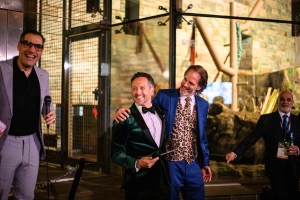 Highlights from the Mercantile Agents National Conference in Adelaide, South Australia.
11/3/2026
Written By: Daniel Taylor
One of the great strengths of our industry is that, despite the thousands of miles separating markets such as Australia and the U.S., many of the challenges we face are remarkably similar.
That was reinforced for me at the 2026 Institute of Mercantile Agents (IMA) National Conference in Adelaide, South Australia.
The IMA represents professionals across Australia’s debt collection, investigation, process serving, and field services sectors. Our annual conference has always been an important opportunity to bring our industry together, but this year we deliberately wanted to broaden the conversation.
Rather than having the industry talking to itself, we wanted regulators, consumer representatives, clients, legal advisers, technology providers, and practitioners in the same room.
And we wanted an international perspective.
That is where our good friend from the U.S., Tim Collins, ACA International’s President-Elect, came in.
Bringing Regulators and Industry Together
One highlight of the conference was our Regulatory Forum.
Australia’s regulatory structure differs from that of the U.S., but there is a lesson I believe translates across jurisdictions: good regulatory outcomes are more likely when regulators, those responsible for implementing policy, consumer representatives, and industry participants actually talk to one another.
Our forum brought together representatives from the Australian Financial Complaints Authority, the financial counseling sector, and leading legal and regulatory specialists.
What made the session particularly valuable was not simply the information presented from the stage — it was the access and dialogue that occurred around the presentation.
Industry participants could ask questions, test practical scenarios, and better understand the thinking behind regulatory expectations. Regulators and other stakeholders also had the opportunity to hear directly from businesses dealing with those expectations every day.
That interaction matters.
Regulation can sometimes be discussed as though it exists independently of operations. Those of us running collection businesses know differently. A regulatory interpretation ultimately has to be translated into a conversation between a collector and a consumer, a system workflow, a hardship process, a quality assurance framework, or a decision made on an account.
Building stronger relationships between industry and those who influence and implement policy helps bridge that gap.
It does not mean industry and regulators will always agree — nor should they. Constructive engagement creates greater understanding on both sides, and I firmly believe it ultimately produces better outcomes for consumers, clients, and the industry.
An Industry Changing Quickly
Change was a continued theme throughout the conference.
Our sessions explored what clients now expect from their collection partners, operational risk, technology and artificial intelligence, insolvency and asset recovery, compliance, and the increasingly international nature of our industry.
One of the clear takeaways from the conference was that the traditional definition of a collection agency continues to evolve.
We are increasingly technology businesses. We are increasingly data businesses. We are increasingly compliance businesses. But most importantly, we remain people businesses.
Technology can improve decision-making, identify risk, automate processes, and create new ways for consumers to engage. At the same time, judgment, empathy, and human intervention remain critical — particularly when dealing with hardship, vulnerability, or complex circumstances.
Those themes are certainly not unique to Australia, which made having an American perspective particularly valuable.
Lessons From America
Tim Collins traveled a considerable distance to join us in Adelaide and deliver his session, “Lessons from America — The Changing Shape of the Collections Industry.”
For our Australian delegates, having someone with Collins’ depth of involvement in the U.S. ARM industry offer a candid perspective on developments in America was extremely valuable. As Collins reflected afterward: “The conversations Australian businesses are having about technology, AI, compliance, consumer engagement, workforce challenges, and the future role of the collection professional are many of the same conversations taking place among ACA members in the United States.”
The U.S. is a substantially larger and more mature market, and developments there can provide useful signals for Australian businesses. At the same time, conversations over the course of the conference made it clear that multiple perspectives offer valuable insights.
Australia has developed its own approach to regulation, hardship, consumer vulnerability, and dispute resolution. Our market is smaller, which also creates different dynamics between creditors, agencies, regulators, and professional associations. Collins was particularly struck by one of Australia’s distinct strengths.
“I was impressed by Australia’s sophisticated approach to hardship and consumer vulnerability,” Collins said. “The programs I heard about go beyond a single accommodation or payment arrangement — they combine early identification, tailored options, specialist support, and thoughtful escalation for consumers facing complex circumstances.”
He was equally engaged by the use of field agents in our market. “Used responsibly, an in-person presence can provide context that remote channels may miss, support difficult conversations, and help determine the most appropriate path forward,” Collins said.
Bringing these perspectives together produced some of the conference’s most interesting discussions.
For me personally, it reinforced the importance of the relationship between the IMA and ACA. I have represented Australia and New Zealand through ACA for several years, and every time I attend an ACA Convention I return home with ideas, relationships, and perspectives that benefit our market. It was therefore particularly satisfying to reverse the journey this time and have an ACA colleague experience our industry firsthand.
More Than the Conference Program
Of course, anyone who has attended an industry conference knows that some of the most valuable conversations don’t necessarily happen on stage.
They happen over coffee. They happen between sessions. And occasionally, apparently, they happen while having a drink beside giant pandas.
We held our Gala Awards Dinner at Adelaide Zoo, with pre-dinner drinks in the Bamboo Forest panda enclosure. It was certainly one of the more unusual networking venues in IMA conference history — and one I suspect Collins will be recounting at ACA events for some time to come.
The conference also included our IMA Industry Awards, recognizing excellence across our profession.
Seeing the room filled with practitioners, business leaders, suppliers, clients, regulators, and international guests reminded me how important professional associations remain. Markets change. Technology changes. Regulations change. But relationships still matter — and they are strengthened when people take the time to meet, exchange ideas, and understand each other’s perspectives.
Collins reflected on this spirit of openness as well, noting that the dialogue between industry participants, regulators, and other stakeholders presented tremendous value. “Hearing different perspectives in the same room, and continuing those conversations informally afterward, created the kind of practical exchange that moves an industry forward,” Collins said.
Australia’s Newest International Speaker
I should also acknowledge one particularly significant professional milestone at the conference.
After traveling from the U.S. to Adelaide and successfully addressing an Australian audience, Collins was proud to announce that he could now officially describe himself as an “international speaker.”
“After crossing the Pacific to speak in Australia, I have informed Daniel and anyone else prepared to listen that I am now officially an ‘international speaker.’ My speaking fee will presumably be adjusted accordingly,” Collins joked.
I am not entirely sure if one presentation in Australia immediately qualifies someone for the international speaking circuit — but as president of the IMA, I am prepared to formally endorse the title. Given the distance Collins traveled to earn it, I think we can allow him to use the title.
More importantly, Collins embraced the conference and our members wholeheartedly. He didn’t simply arrive, deliver a presentation, and leave. He participated in the conversations, met our members, and experienced the how the industry operates in Australia. That is ultimately what international industry relationships should be about.
Looking Beyond Our Borders
As an industry, we can easily become focused on what is happening within our own regulatory jurisdiction. But some of the best ideas come from looking beyond it.
Australia can learn from the enormous experience, scale, and innovation within the U.S. ARM industry. Equally, there are aspects of the Australian regulatory and operational environment that may offer useful perspectives for our American colleagues. The goal is to keep those conversations going.
On behalf of the Institute of Mercantile Agents, I would like to thank Tim Collins for making the long trip to Australia and for his contribution to our conference. We look forward to continuing to strengthen the relationship between the IMA and ACA— although we may have inadvertently created a problem.
Now that Collins is an international speaker, we may never hear the end of it.
Daniel Taylor is the president of the Institute of Mercantile Agents and Australia/New Zealand Delegate with ACA International.