
 ACA’s Visionaries Committee has compiled strategies for employers to support staff mental health, which can promote an inclusive environment and improve retention.
 ACA’s Visionaries Committee has compiled strategies for employers to support staff mental health, which can promote an inclusive environment and improve retention.
10/04/2024 2:00 P.M.
3 minute read
By Debra Ciskey
Did you know that Oct. 10 is World Mental Health Day? It wraps up Mental Illness Awareness Week, which is celebrated during the first week of October. World Mental Health Day was designated as a day to advocate for mental health awareness and education. Why is this important when we think about diversity, equity and inclusion as an employer?
Consider that 1 in 6 people experience mental health problems in the workplace. Twelve billion working days are lost every year to depression and anxiety. Happy employees are 13% more productive. You can find more data like this here.
Members of ACA’s Visionaries Committee discussed ways that employers can show staff members that their mental wellness is important, that their needs can be accommodated in the workplace, and even better, that resources are available to them. We all agreed that promoting an environment that supports the mental health needs of staff can result in a more inclusive workplace and better staff retention. How can this be accomplished? We generated a few ideas we’d like to share:
- Be sure staff members attend your annual benefits overview meetings at renewal time so that everyone knows about the mental health resources available to them through the plan they have chosen. It’s easy to feel hopeless if you don’t know that mental health support could be just a phone call away.
- Promote work/life balance. For your remote workers, encourage, or even require, your employees to shut down their workstations at the scheduled end of their workday to emphasize your commitment to their “at home” time and their families.
- Create flyers to assist employees with mental health issues. Invite a psychologist to host monthly meetings to discuss mental health topics and offer solutions, lead mindfulness exercises, and other activities that may help relieve stress.
- Employees with financial struggles often experience stress, anxiety and depression. Create an easily accessible document that contains resources in your area for financial assistance.
- Publish flyers with contact information for your Employee Assistance Program (EAP) everywhere that employees might go for internal work-related resources, such as on your SharePoint, in your learning management system, in your time keeping system, etc. Make hard copies easily available in restrooms, by the employee entrance/exit, and in the breakroom. Regularly evaluate the usage of your EAP. You should be able to get data without compromising employee confidentiality.
- Show employees you care by getting to know them as individuals in regular one-on-one meetings. We all talk about performance, but how many of us ask employees with sincere empathy, “How are you doing?” and “How can I help?” If professional help seems to be needed, be sure your employee knows you support them, and share the resources you have available with them.
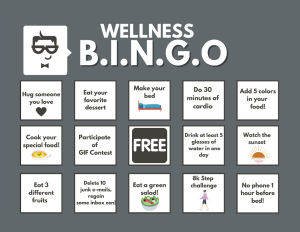
- Make being at work enjoyable. In-office games not related to work can be a great way to de-stress. Distribute Bingo cards like the one illustrated here not only to remind people to develop wellness habits, but to get rewarded for doing so when you give them a prize for getting a Bingo.
Find helpful resources here: https://www.transformationsnetwork.com/post/8-online-mental-health-resources-anyone-can-access.
This content was provided by ACA’s Visionaries Committee.
Visionaries Committee: Broadening Perspectives and Expanding Opportunities
As champions of progress, the ACA Visionaries Committee leads ACA International’s commitment to fostering a diverse, equitable, inclusive, and welcoming environment for all. Through the creation, development and implementation of education, conversations and mentorship, we can recognize and better understand the challenges faced by underrepresented populations in the credit and collections industry. Learn more.










