From post-election policy shifts to AI adoption and profitability challenges, ACA’s 2026 Fall Forum explored the decisions shaping the industry’s future.
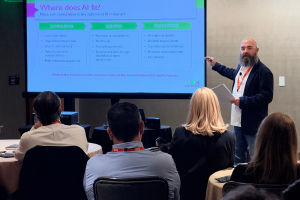 From post-election policy shifts to AI adoption and profitability challenges, ACA’s 2026 Fall Forum explored the decisions shaping the industry’s future.
11/09/2026 5:00 P.M.
As the receivables management industry prepares for 2027, agency leaders face no shortage of challenges, from shifting political priorities and evolving technology to growing pressure to improve efficiency and profitability.
At ACA International’s 2026 Fall Forum in Scottsdale, Arizona, held Nov. 4–6, 2026, industry experts offered insights on how organizations can adapt and prepare for what’s ahead.
Navigating a Changing Political Landscape
Just two days after the midterm elections, a main stage panel examined the results and what they could mean for the receivables management industry.
Led by Jack Brown III, president of Gulf Coast, the discussion featured Brownstein Hyatt Farber Schreck’s Nadeam Elshami, public policy principal; Mark P. Begich, strategic consulting advisor; and Leah Dempsey, shareholder and ACA’s federal lobbyist. The panelists joined attendees virtually.
Panelists pointed to affordability concerns as a key driver for voters in the election and discussed how a changing Congress could shape ARM industry regulatory oversight and legislative priorities in 2027.
For ACA members, potential issues expected on Capitol Hill next year include medical debt credit reporting, Consumer Financial Protection Bureau regulations and oversight, interest rate caps, debt buyers, wage garnishment, and artificial intelligence regulation.
“I do think we’re going to be entering into one of the most challenging environments this industry has had probably since the COVID era,” Dempsey said.
She noted that some proposals could draw bipartisan support, including on issues that have historically divided the parties.
Panelists also identified opportunities for the industry to build relationships with newly elected lawmakers, such as moderate Democrats, by focusing on shared priorities like creating a consistent regulatory environment.
“I think you just need to kind of rejigger your agenda priorities, not in the sense of what you think is critical, but how you present it,” Begich said.
Panelists encouraged ACA members to find common ground with lawmakers while continuing to advocate for policies that support the industry. They also emphasized the importance of building relationships with lawmakers and their staff early, as changes in congressional leadership could bring renewed attention to financial services regulation.
“You have to find those touch points that will get you into the discussion,” Begich said.
As Congress prepares for a new legislative session, artificial intelligence is also expected to receive renewed attention from congressional committees and federal regulators — adding another dimension of uncertainty as agencies continue to expand their use of the technology.
Moving AI From Discussion to Daily Operations
Artificial intelligence was another major focus throughout Fall Forum, with sessions that addressed how agencies are already incorporating the technology into their operations.
John Coppola, director of operations at Balanced Healthcare Receivables, LLC, shared his agency’s experience implementing an AI-powered collection agent to handle inbound calls, payments, insurance information, and other routine interactions during the session, “The Digital Collector: What Happens When AI Becomes Part of Your Collection Floor?”
The technology has helped reduce “call volume bottlenecks” and free collectors to focus on more complex situations. However, Coppola cautioned that successful implementation requires careful oversight and clear policies — including ensuring consumers can always reach a human agent.
“AI does not fix a bad strategy,” Coppola said. “An AI agent is only as effective as a strategy behind it.”
Another session, “From Dashboards to Decisions: A Practical Maturity Framework for Operational AI in Collections,” explored how AI and machine learning can help agencies make better use of operational data.
One example showed how an agency found approximately 80,000 accounts that were not being worked, uncovering a large gap that had gone undetected through its existing processes. Further analysis also revealed excessive dialing activity, allowing the agency to adjust staffing and improve results.
The discussion highlighted how technology can help organizations identify missed opportunities and make more informed decisions about where to direct their resources.
Jonathan Abenson, CEO of Oxygen XL, noted that adopting AI also brings additional responsibilities: protecting sensitive information, maintaining systems, and ensuring recommendations fit within existing workflows. He emphasized that the technology’s value depends on an organization’s willingness to act on what the data reveals.
Taking a Closer Look at Profitability
Looking beyond technology and regulation, Fall Forum was an opportunity attendees to take a closer look at how they measure their organization’s performance.
In “The Profitability Paradox: Identifying Your Most Profitable Clients,” speaker Ken Rubin, CFO at Hollis Cobb, LLC, discussed how agencies can identify their most profitable clients and better understand the costs associated with serving them.
According to Rubin, revenue alone doesn’t always provide the full picture. A high-revenue client may require significant resources, while a client that appears unprofitable could still help cover costs that would remain if the relationship ended.
The session also highlighted the importance of looking closely at financial data and considering factors such as contract terms and long-term relationships before making business decisions.
“Understand your cost structure in your office. Understand how they attach to specific clients,” Rubin said, “Whether good or bad, profitable or unprofitable, at least you know what’s driving your organization. I think that information is important.”
The discussion reinforced a broader theme from Fall Forum: The more effectively agencies use data they already have, the better positioned they are to make sound decisions.
Looking Ahead
Although the headwinds facing receivables management organizations vary, the conversations at Fall Forum emphasized the importance of staying informed, revisiting existing strategies, and staying open to change.
From preparing for potential regulatory shifts to finding new ways to use technology and improve financial performance, the sessions offered perspectives that agencies can apply as they plan for the year ahead.
Fall Forum also gave members space to share ideas and learn from others navigating the same landscape — a reminder that the industry’s most valuable resource may be the community itself.
Remember to subscribe to ACA Daily and Member Alerts under your My ACA Assistant profile when logged in to acainternational.org.